
Do you want to know how to learn Dutch A2 in the most effective and efficient way possible?
If so, the Dutch A2 Grammar Anki Deck is the best solution for you!
In this post I am going to explain everything you need to know about why you should use the Dutch A2 Grammar Anki Deck, what it is, and how to get it!
Why should you use this Dutch A2 Grammar Anki Deck?
Additionally, for further clarity, the International Phonetic Alphabet (IPA) is provided for every sentence. This means that you can check pronunciation whenever needed.
One of the biggest advantages of using the Dutch A2 Grammar Anki Deck, is that it is the PERFECT tool for memorizing what you have learned. No longer will you keep forgetting what you studied!
Read more on the benefits of Anki in the next chapter!
Why is it so important to use Anki?

Card Structure of the Dutch A2 Grammar Anki Deck
Every grammar point in the Dutch A2 Grammar Anki Deck is practised in full sentences, so you learn it in context. Each sentence card includes an image, IPA notation, an explanation, and an audio file.
The image allows you to create a better memory with the word/concept that you are studying. You are linking a concept with a certain image.
The IPA notation shows you exactly how the sentence is pronounced, so you can repeat that pronunciation yourself.
The explanation is there so you always understand why the answer is correct, even if you have forgotten the rule.
The audio file allows you to understand how something is pronounced in Dutch. This will help you to improve your Dutch comprehension.
Here is an extract, so you can hear what the audio sounds like in the Dutch A2 Grammar Anki Deck.
There are 2 card types in the Dutch A2 Grammar Anki Deck.
- Fill in the blank
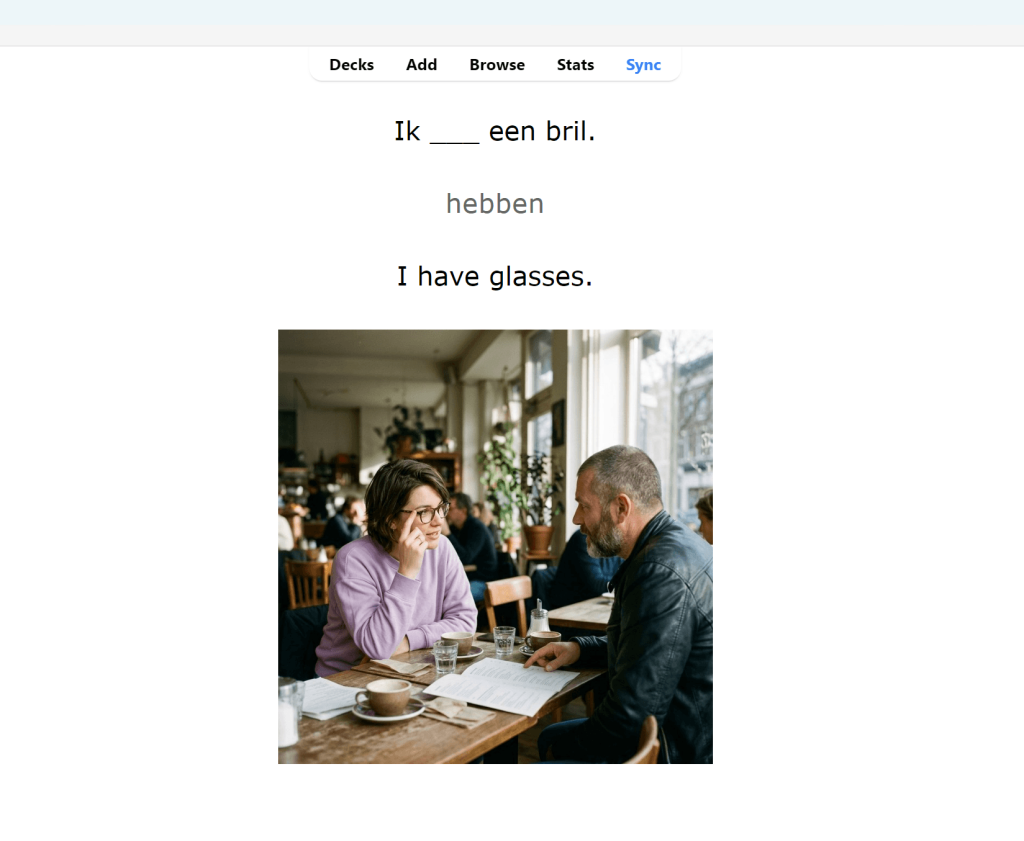
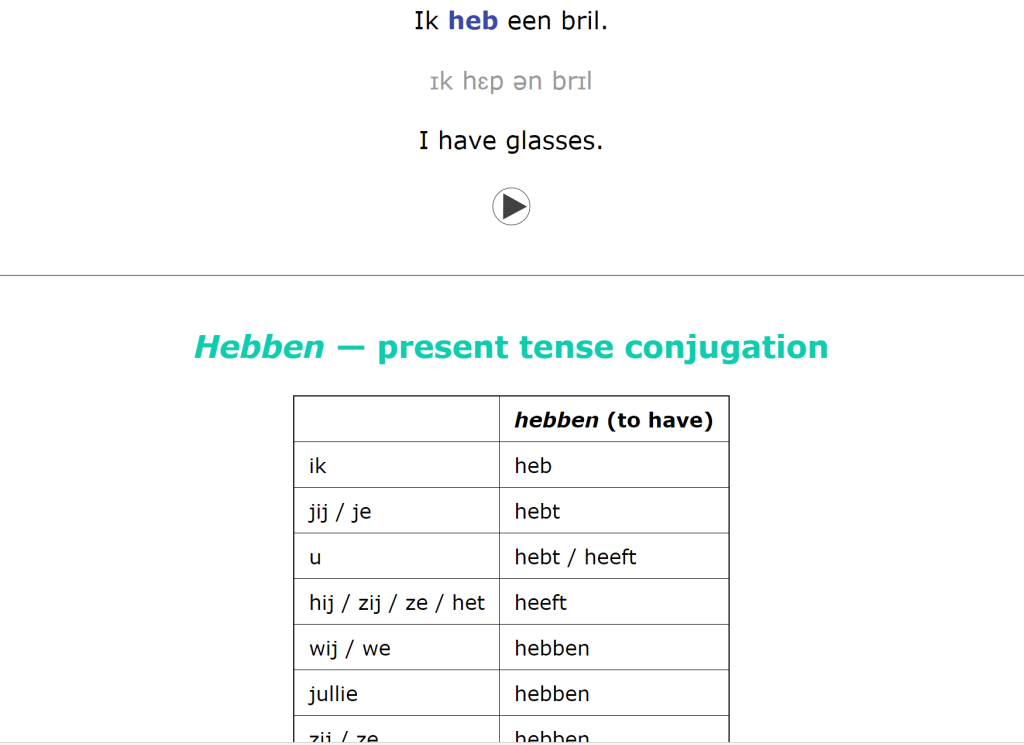
- Type the correct Dutch word
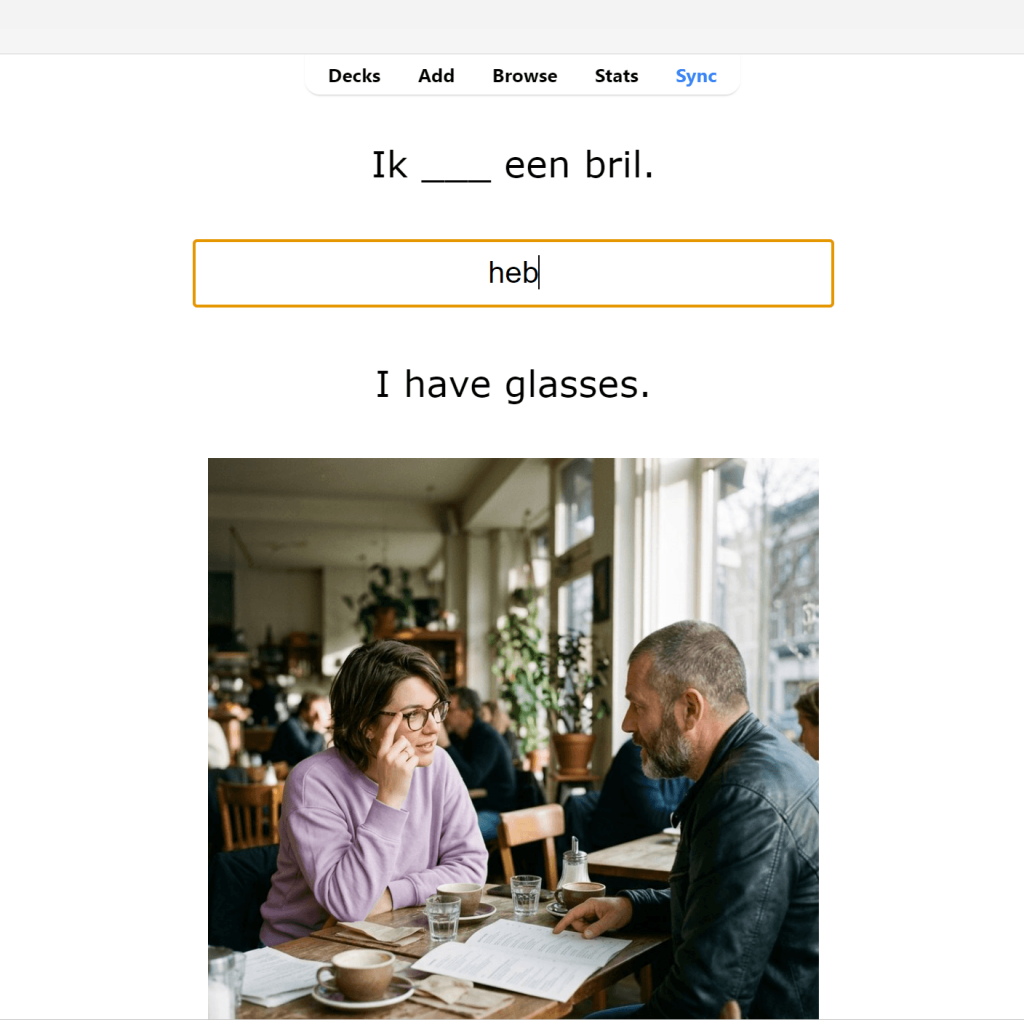
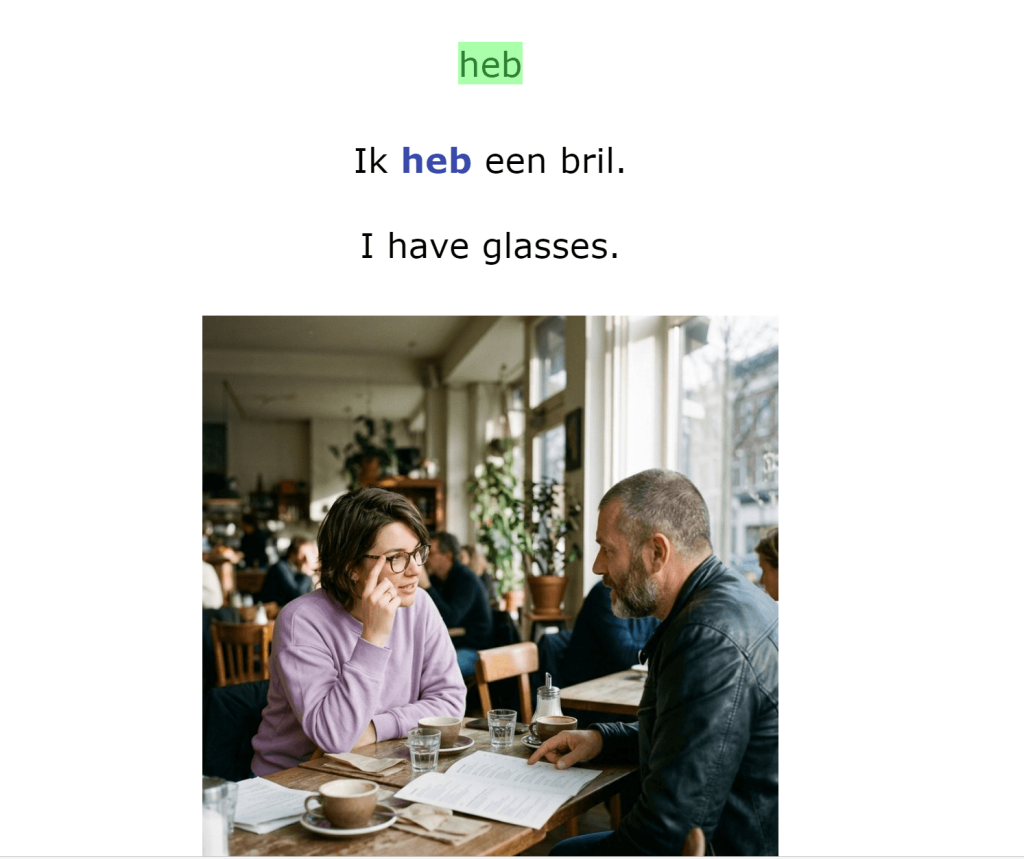
This is the same as the first card, however in this one, you have to type the correct word on the front side. You will see if you were correct, or made any errors on the back side.
Course Content of the Dutch A2 Grammar Anki Deck
The Dutch A2 Grammar Anki Deck contains a total of 1510 Flashcards across 8 chapters, with a total of 117 lessons.
I am going to show you exactly what’s inside the Dutch A2 Grammar Anki Deck, chapter by chapter.
Please note that for every sentence there are 2 card types, so every sentence gives you 2 flashcards.
The card types have been explained in the previous chapter.
Chapter 1: Pronouns
| Lesson | Sentences | Total Flashcards |
| Er with numbers | 6 | 12 |
| Elkaar = Each other | 6 | 12 |
| Giving and sending something to someone | 6 | 12 |
| Deze and Dit = This One | 4 | 8 |
| Die and Dat = That One | 4 | 8 |
| Deze = These | 4 | 8 |
| Die = Those | 4 | 8 |
| Iemand, Niemand, and Iedereen = Someone, No One, and Everyone | 4 | 8 |
| Iets, Niets, and Alles = Something, Nothing, and Everything | 4 | 8 |
| Je and men for people in general | 4 | 8 |
| Total | 92 |
This chapter contains 10 lessons with a total of 92 Flashcards.
You will learn how to use elkaar, how to say this one and that one, and words such as iemand, niemand, iets, and niets. You will also learn how to use er with numbers and how to talk about people in general with je and men.
Chapter 2: Verbs
| Lesson | Sentences | Total Flashcards |
| Describing location with staan, liggen, zitten, and hangen | 8 | 16 |
| Word order with separable verbs | 6 | 12 |
| Separable verbs with modal verbs | 6 | 12 |
| When to use the present perfect | 3 | 6 |
| Forming the present perfect | 4 | 8 |
| Present perfect with hebben | 8 | 16 |
| Present perfect with zijn | 8 | 16 |
| Hebben or zijn in the present perfect | 13 | 26 |
| Forming past participles | 8 | 16 |
| Past participles without ge- | 6 | 12 |
| Past participles of separable verbs | 6 | 12 |
| Common irregular past participles | 8 | 16 |
| Irregular past participles: gehad, gekocht, gedacht, and more | 6 | 12 |
| Irregular past participles: gegeven, genomen, gekregen, and more | 8 | 16 |
| Irregular past participles: gevonden, begonnen, geslapen, and more | 8 | 16 |
| Word order in the present perfect | 6 | 12 |
| When to use the simple past | 3 | 6 |
| Forming the simple past | 8 | 16 |
| Hebben and zijn in the simple past | 6 | 12 |
| Separable verbs in the simple past | 6 | 12 |
| Gaan, komen, and zien in the simple past | 6 | 12 |
| Doen, eten, drinken, and lezen in the simple past | 8 | 16 |
| Denken, brengen, kopen, and zoeken in the simple past | 8 | 16 |
| Kijken, krijgen, blijven, and schrijven in the simple past | 8 | 16 |
| Geven, nemen, spreken, and vergeten in the simple past | 8 | 16 |
| Slapen, laten, vallen, and helpen in the simple past | 8 | 16 |
| Vinden, beginnen, and zingen in the simple past | 6 | 12 |
| Zeggen, weten, and vragen in the simple past | 6 | 12 |
| Kunnen, moeten, mogen, and willen in the simple past | 8 | 16 |
| Present perfect or simple past | 6 | 12 |
| Dat = That | 6 | 12 |
| Omdat = Because | 6 | 12 |
| Als = If or When | 8 | 16 |
| Starting a sentence with omdat or als | 6 | 12 |
| Separable verbs with dat or omdat | 6 | 12 |
| Modal verbs with dat or omdat | 6 | 12 |
| Present perfect with dat or omdat | 6 | 12 |
| Adding information with die | 7 | 14 |
| Adding information with dat | 4 | 8 |
| How to use the passive in Dutch | 6 | 12 |
| Actions in progress | 7 | 14 |
| Proberen, beginnen, and vergeten: use te + full verb | 7 | 14 |
| Proberen, beginnen, and vergeten with separable verbs | 8 | 16 |
| Om … te = In order to | 7 | 14 |
| Het = It, pointing to what comes next | 6 | 12 |
| How to talk about the future in Dutch | 4 | 8 |
| Talk about the future with zullen + full verb | 9 | 18 |
| Polite requests | 6 | 12 |
| Polite instructions and commands | 6 | 12 |
| Introducing someone or something with er | 6 | 12 |
| Where to put er | 6 | 12 |
| Giving someone something: person first or thing first | 6 | 12 |
| Describe the activity without naming who | 4 | 8 |
| Verbs with fixed prepositions | 6 | 12 |
| Total | 712 |
This chapter contains 54 lessons with a total of 712 Flashcards.
You will learn how to form and use the present perfect and the simple past, including the most common irregular verbs. You will also learn the word order after dat, omdat, and als, and how to use the passive, the future, polite requests, and verbs with fixed prepositions.
Chapter 3: Articles and Nouns
| Lesson | Sentences | Total Flashcards |
| How to use diminutives in Dutch | 8 | 16 |
| How to choose the ending of the diminutive | 18 | 36 |
| Plurals that change: stad to steden, kind to kinderen | 7 | 14 |
| Plural of compound nouns | 6 | 12 |
| When to use een and when not to | 7 | 14 |
| Amounts: twee liter or twee flessen | 6 | 12 |
| Fractions, decimals, and percentages | 7 | 14 |
| Ownership with names | 6 | 12 |
| Total | 130 |
This chapter contains 8 lessons with a total of 130 Flashcards.
You will learn how to form diminutives and irregular plurals such as steden and kinderen. You will also learn when to use een, how to talk about amounts, and how to say fractions, decimals, and percentages.
Chapter 4: Adjectives and Adverbs
| Lesson | Sentences | Total Flashcards |
| How to make comparisons in Dutch | 12 | 24 |
| How to use superlatives in Dutch | 6 | 12 |
| Irregular comparisons: goed, veel, and weinig | 9 | 18 |
| Order of time, manner, and place | 6 | 12 |
| Starting sentences with daarom, daarna, or dan | 6 | 12 |
| Total | 78 |
This chapter contains 5 lessons with a total of 78 Flashcards.
You will learn how to make comparisons and superlatives, including goed, veel, and weinig. You will also learn the order of time, manner, and place, and how to start a sentence with daarom, daarna, or dan.
Chapter 5: Questions and Interrogatives
| Lesson | Sentences | Total Flashcards |
| How to use the Dutch word of | 6 | 12 |
| Question words in statements | 7 | 14 |
| Wat voor = What kind of | 5 | 10 |
| Asking about people with met wie, voor wie, and aan wie | 9 | 18 |
| Total | 54 |
This chapter contains 4 lessons with a total of 54 Flashcards.
You will learn how to use of in questions and how to put question words in statements. You will also learn how to use wat voor and how to ask met wie, voor wie, and aan wie.
Chapter 6: Negations
| Lesson | Sentences | Total Flashcards |
| Where to put niet | 9 | <