
Do you want to learn Dutch B2 in the most effective and efficient way possible?
If so, the Complete Dutch B2 Anki Deck is the best solution for you!
The Complete Dutch B2 Anki Deck contains all the grammar and vocabulary of Dutch B2.
In this post I am going to explain everything you need to know about why you should use the Complete Dutch B2 Anki Deck, what it is, and how to get it!
Why should you use the Complete Dutch B2 Anki Deck?
Additionally, for further clarity, the International Phonetic Alphabet (IPA) is provided for every sentence in both decks, and for every word in the Vocabulary Deck. This means that you can check pronunciation whenever needed.
One of the biggest advantages of using the Complete Dutch B2 Anki Deck, is that it is the PERFECT tool for memorizing what you have learned. No longer will you keep forgetting what you studied!
Read more on the benefits of Anki in the next chapter!
Why is it so important to use Anki?

Card Structure of the Complete Dutch B2 Anki Deck
Every word and every grammar point in the Complete Dutch B2 Anki Deck is practised in full sentences, so you learn it in context. Each sentence card includes an image, IPA notation, and an audio file. The grammar cards also include an explanation.
The image allows you to create a better memory with the word or concept that you are studying. You are linking a concept with a certain image.
The IPA notation shows you exactly how something is pronounced, so you can repeat that pronunciation yourself.
The audio file allows you to understand how something is pronounced in Dutch. This will help you to improve your Dutch comprehension.
The explanation is there so you always understand why the answer is correct, even if you have forgotten the rule. The explanation is only added in the Grammar Deck.
Here is an extract, so you can hear what the audio sounds like in the Complete Dutch B2 Anki Deck: a sentence from the Vocabulary Deck and a sentence from the Grammar Deck.
There are 2 card types in the Complete Dutch B2 Anki Deck.
- Fill in the blank


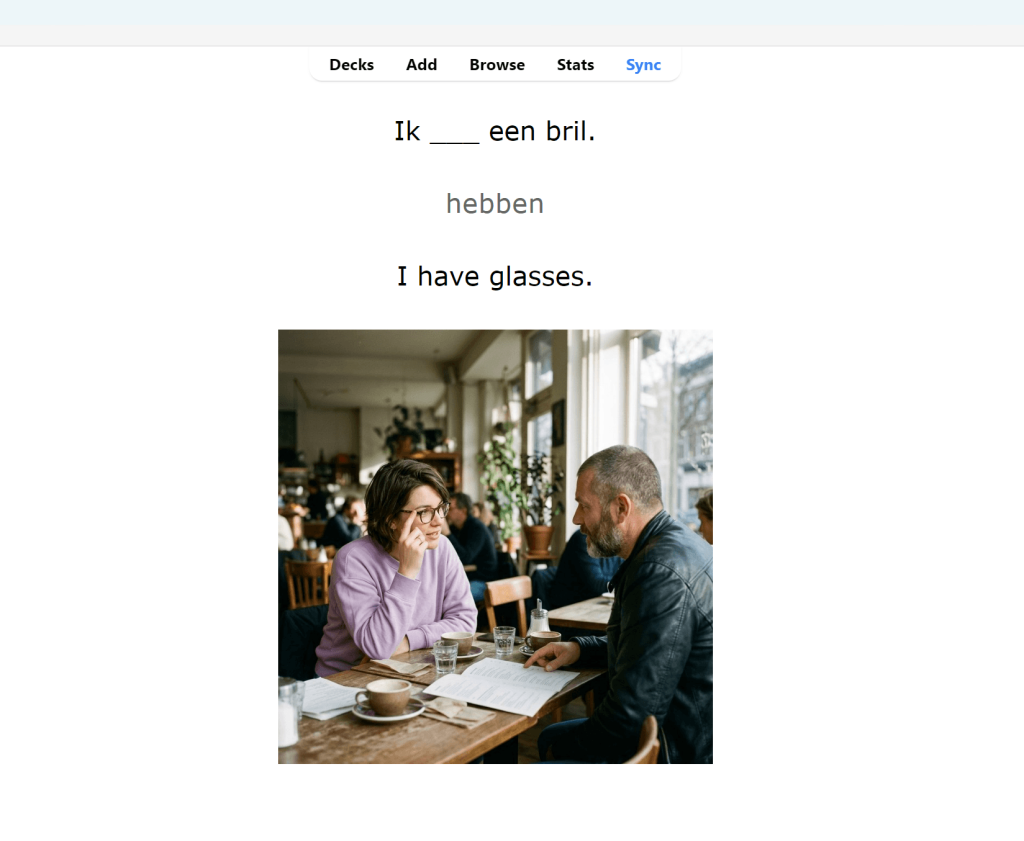
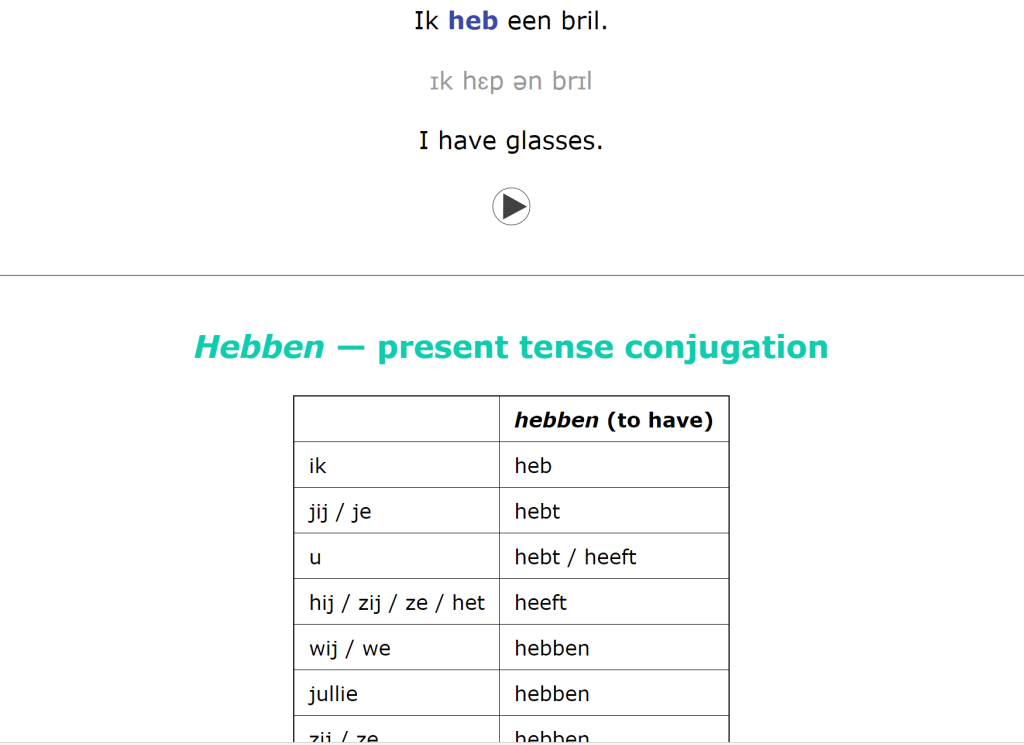
- Type the correct Dutch word
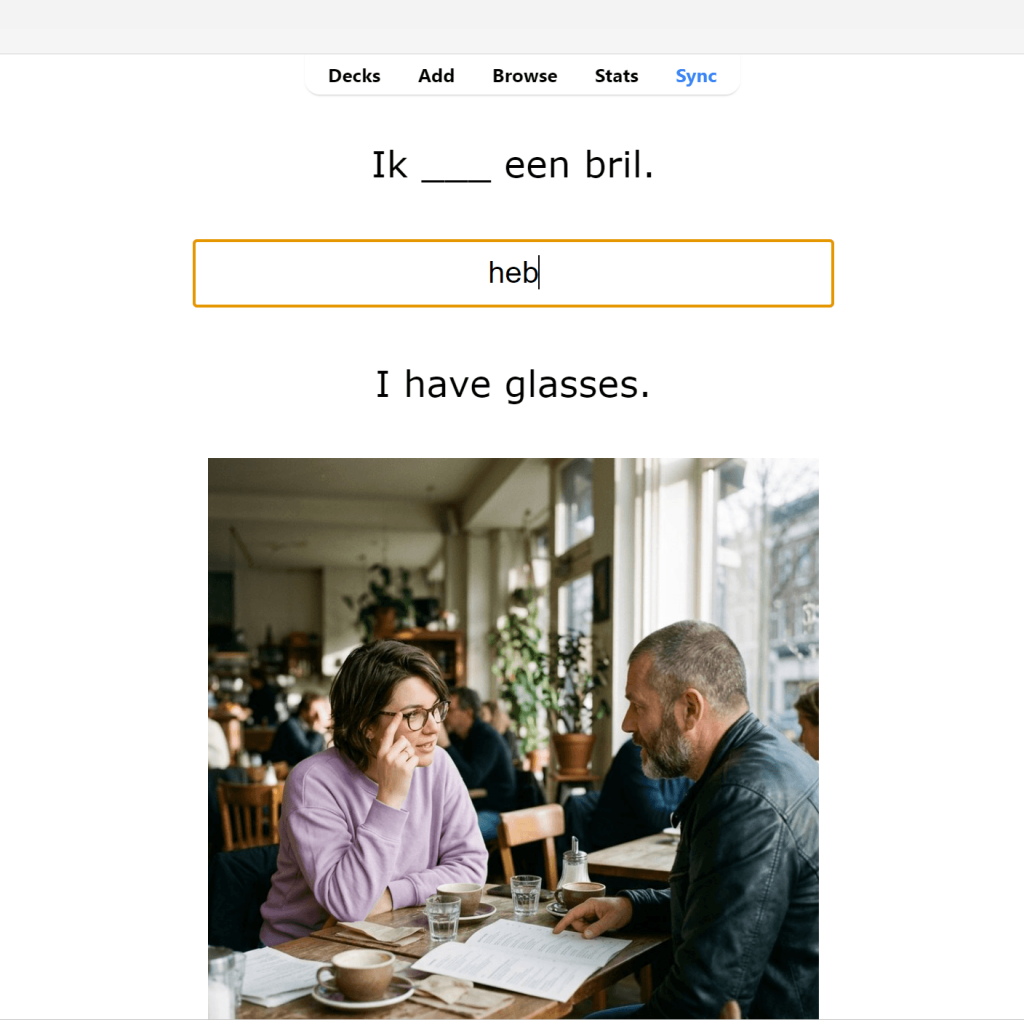
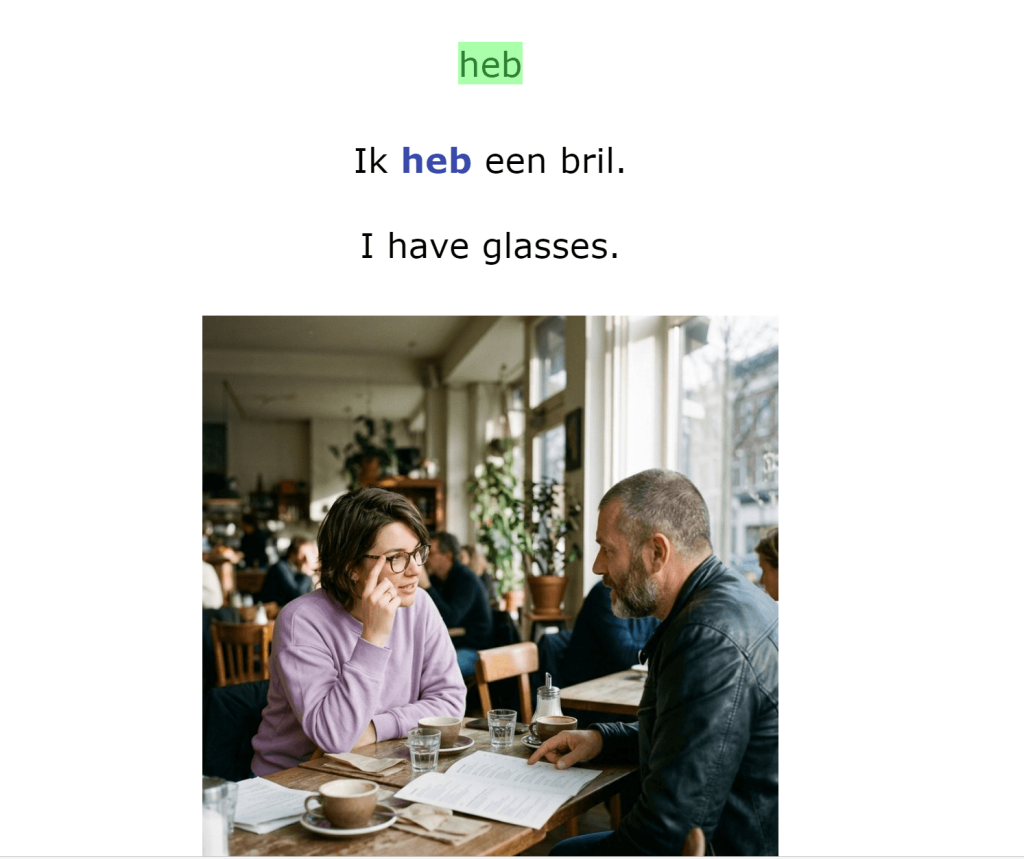
This is the same as the first card, however in this one, you have to type the correct word on the front side. You will see if you were correct, or made any errors on the back side.
Course Content of the Complete Dutch B2 Anki Deck
The Complete Dutch B2 Anki Deck consists of two decks:
- Dutch B2 Grammar Anki Deck
- Dutch B2 Vocabulary Anki Deck
The Dutch B2 Grammar Anki Deck contains a total of 840 Flashcards across 8 chapters, with a total of 80 lessons.
The Dutch B2 Vocabulary Anki Deck contains a total of 3170 Flashcards across 7 chapters, with a total of 25 lessons. It teaches you 1585 Dutch words.
Together, that is 4010 Flashcards. I am going to show you exactly what’s inside the Complete Dutch B2 Anki Deck, deck by deck and chapter by chapter.
Please note that for every sentence there are 2 card types, so every sentence gives you 2 flashcards.
Deck 1: Dutch B2 Grammar Anki Deck
The first Anki Deck is about grammar. This is what you will learn.
Chapter 1: Pronouns
| Lesson | Sentences | Total Flashcards |
| Beide and Allebei = Both | 6 | 12 |
| Sommige and Enkele = Some and A Few | 6 | 12 |
| Zo’n, Zulke, and Zulk = Such a and Such | 8 | 16 |
| Dezelfde and Hetzelfde = The Same | 7 | 14 |
| Mezelf, jezelf, and more after a preposition | 8 | 16 |
| Zich versus Zichzelf | 6 | 12 |
| Elkaar versus Zichzelf | 6 | 12 |
| Die and dat to refer back | 8 | 16 |
| Ze for people in general | 6 | 12 |
| Hierover and Hiermee = About This and With This | 4 | 8 |
| Ergens = Somewhere or Something | 6 | 12 |
| Nergens = Nowhere or Nothing | 6 | 12 |
| Overal = Everywhere or Everything | 6 | 12 |
| Zorg ervoor dat, Denk eraan dat, and Ik reken erop dat | 6 | 12 |
| Ik denk erover om … te and Ik kies ervoor om … te | 4 | 8 |
| Saying how many things there are | 5 | 10 |
| Het beste wat and Het enige wat | 4 | 8 |
| Splitting waarmee, waarover, waarop, and waaraan | 4 | 8 |
| Total | 212 |
This chapter contains 18 lessons with a total of 212 Flashcards.
You will learn words such as beide, allebei, sommige, zo’n, and dezelfde, and the difference between zich, zichzelf, and elkaar. You will also learn how to use ergens, nergens, and overal, and fixed expressions with er such as zorg ervoor dat.
Chapter 2: Verbs
| Lesson | Sentences | Total Flashcards |
| Had moeten = Should have | 6 | 12 |
| Heb moeten versus Had moeten | 6 | 12 |
| Had kunnen = Could have | 4 | 8 |
| Had moeten after dat | 6 | 12 |
| Zien and horen in the present perfect | 8 | 16 |
| Laten in the present perfect | 6 | 12 |
| Zitten, staan, and liggen in the present perfect | 6 | 12 |
| Blijven in the present perfect | 6 | 12 |
| Had niet hoeven = Did not need to | 4 | 8 |
| Vóórkomen versus Voorkómen | 6 | 12 |
| When om does not mean “in order to” | 5 | 10 |
| Passive in the past perfect | 5 | 10 |
| Passive in the future | 5 | 10 |
| Passive with moeten | 5 | 10 |
| Passive with kunnen | 5 | 10 |
| Passive in the present perfect after dat | 6 | 12 |
| Guesses about the past | 5 | 10 |
| Use moeten to say “must have” | 5 | 10 |
| Use kunnen to say “may have” | 5 | 10 |
| The tense after zei dat | 6 | 12 |
| Reporting a plan or a promise | 5 | 10 |
| Zou = Is said to | 5 | 10 |
| Reflexive verbs with a fixed preposition | 8 | 16 |
| More verbs with a fixed preposition | 6 | 12 |
| Total | 268 |
This chapter contains 24 lessons with a total of 268 Flashcards.
You will learn how to say should have and could have with had moeten and had kunnen, and how to use modal verbs to make guesses about the past. You will also learn the passive in more tenses and with modal verbs, how to report plans and promises, and more verbs with fixed prepositions.
Chapter 3: Articles and Nouns
| Lesson | Sentences | Total Flashcards |
| Articles with places | 8 | 16 |
| How to use group words in Dutch | 5 | 10 |
| Total | 26 |
This chapter contains 2 lessons with a total of 26 Flashcards.
You will learn when to use an article with places. You will also learn how to use group words in Dutch.
Chapter 4: Adjectives and Adverbs
| Lesson | Sentences | Total Flashcards |
| Use on- to say the opposite | 5 | 10 |
| Saying what som |